
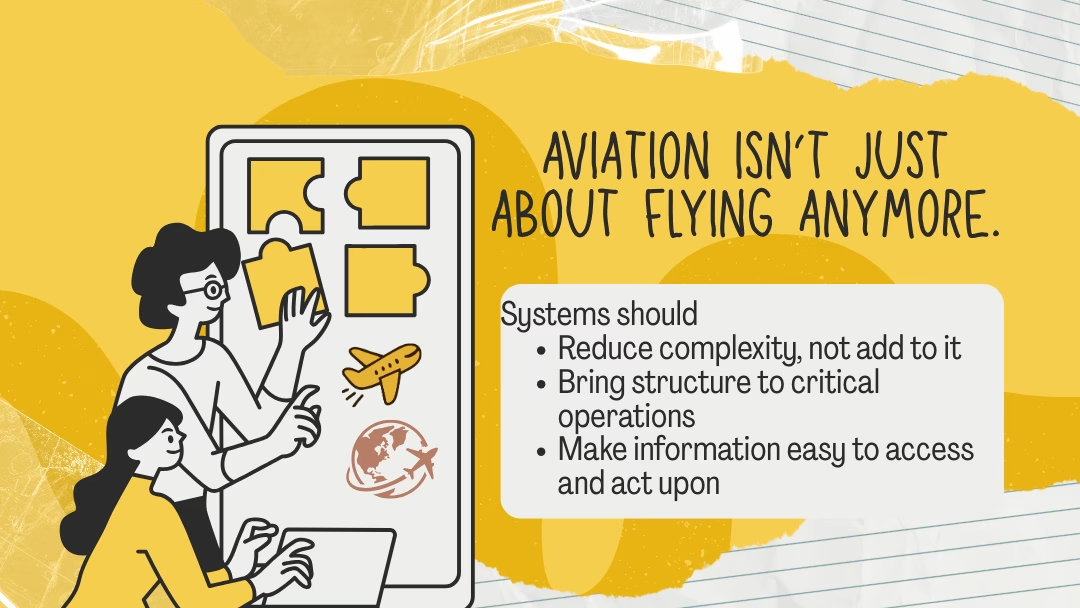
✈️ Aviation Isn’t Just About Flying Anymore
For decades, aviation success was measured by aircraft performance, runway efficiency, and airspace access.
Today, those fundamentals still matter—but they’re no longer enough.
Modern aviation is increasingly defined by data, systems, and decision-making.
Behind every safe and on-time flight lies a complex web of flight planning, airspace coordination, maintenance scheduling, and operational oversight. And how well these elements connect often determines operational success.
🔍 The Industry Is Quietly Transforming
Across the aviation ecosystem, a clear shift is underway:
- Manual processes are being digitized
- Disconnected tools are being replaced by integrated platforms
- Decisions are moving from reactive to data-driven
This transformation isn’t about adopting technology for its own sake.
It’s about coping with growing complexity.
As traffic volumes rise, compliance requirements tighten, and operational margins shrink, aviation organizations need more than experience—they need clarity.
⚠️ The Hidden Challenge: Fragmentation
While aircraft and avionics continue to advance, many aviation operations still rely on fragmented systems:
- Flight data stored in one platform
- Airspace coordination handled in another
- Maintenance planning managed separately
When systems don’t communicate, teams spend time reconciling information instead of acting on it.
This slows decisions, increases workload, and introduces avoidable risk.
The real challenge in aviation today isn’t a lack of innovation.
It’s the lack of structure and centralized visibility.
🧠 Why Smarter Systems Matter
Smarter aviation systems don’t just automate tasks—they enable better decisions.
When data is centralized and workflows are aligned:
- Teams respond faster
- Coordination improves across departments
- Errors caused by miscommunication decrease
- Operational confidence increases
In an industry where safety and precision are non-negotiable, clarity becomes a strategic advantage.
🚀 Technology Should Support People
At Roger Aviation, we believe aviation technology should work with people—not around them.
Systems should:
- Reduce complexity, not add to it
- Bring structure to critical operations
- Make information easy to access and act upon
Because aviation professionals should focus on decision-making—not managing disconnected tools.
🔮 Looking Ahead
The future of aviation will be defined not only by aircraft in the sky, but by intelligence on the ground.
Organizations that invest in integrated systems, clear data flows, and people-first digital transformation will be better positioned to operate safer, smoother, and more resilient aviation environments.
✈️ Aviation isn’t just about flying anymore.
It’s about how intelligently we operate.
And this shift is only just beginning.