

From Project Delivery to Operational Reality: The Most Overlooked Risk in Aviation Programs

In aviation, projects are often declared “successful” the day they are delivered.
The terminal is complete.
The system is installed.
The contract milestones are met.
Yet months later, operational teams are still struggling.
This gap between project delivery and operational reality is one of the most overlooked—and costly—risks in aviation programs.
The Illusion of Project Completion
Aviation projects typically focus on:
- Construction completion
- System installation
- Regulatory sign-offs
- Contractual milestone achievement
While these are essential, they do not guarantee operational readiness.
Airports frequently face situations where:
- Systems exist but are not fully integrated
- Operational teams are not adequately trained
- Processes are documented but not practiced
- Data flows are incomplete or unreliable
The result is infrastructure that is technically delivered—but operationally fragile.
Why This Gap Exists in Aviation Programs
1. Projects and Operations Are Managed Separately
Project teams are incentivized to deliver on time and within scope.
Operations teams are responsible for safety, reliability, and continuity.
When these two worlds are not aligned early, handover becomes reactive rather than structured.
2. Contracts Focus on Delivery, Not Live Operations
Many aviation contracts define what must be delivered, but not how it should perform once operational.
Key operational questions are often left unanswered:
- Who owns system performance after go-live?
- How are issues escalated and resolved?
- What defines “operational acceptance”?
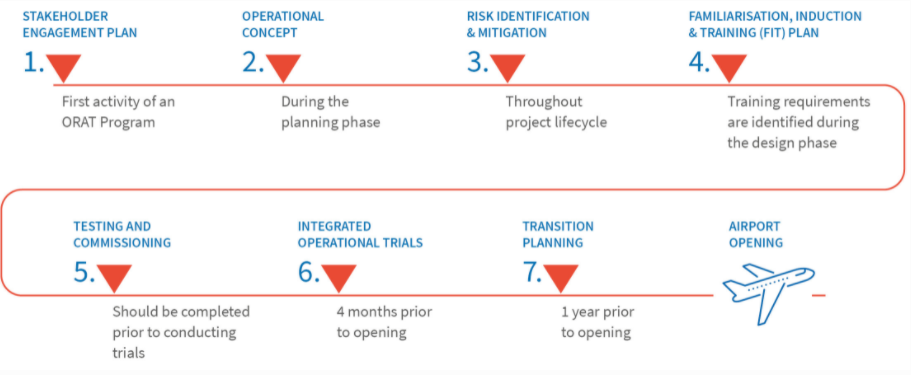
3. Operational Readiness Is Treated as a Late Activity
Operational readiness is frequently addressed near the end of a project—when timelines are tight and changes are expensive.
By then, risks are no longer theoretical; they are operational realities.
Why Operational Readiness Is a Governance Issue
Operational readiness is not a checklist.
It is a governance discipline.
When embedded early, governance ensures:
- Clear ownership across project and operations teams
- Defined handover criteria—not just completion dates
- Performance metrics aligned with real airport operations
- Continuous visibility for leadership
This approach transforms handover from a risk point into a controlled transition.
What Good Aviation Programs Do Differently
Successful aviation organizations:
- Involve operations teams during design and tender stages
- Define operational acceptance criteria within contracts
- Test systems in real operational scenarios before go-live
- Align training, documentation, and data readiness early
- Treat operational readiness as a leadership responsibility—not a project afterthought
These practices significantly reduce post-go-live disruptions.
How Roger Aviation LLC Supports Operationally Ready Aviation Programs
Roger Aviation works with airports and aviation stakeholders to bridge the gap between project delivery and live operations.
Our advisory focus includes:
- Embedding operational readiness into tender and contract frameworks
- Aligning governance across project, technology, and operations teams
- Supporting structured transitions from delivery to steady-state operations
- Reducing operational risk during critical go-live phases
The objective is simple: ensure aviation programs work safely, efficiently, and sustainably from day one.
Final Thought
In aviation, the most critical moment is not when a project is completed.
It is when operations begin.
Organizations that plan for operational reality—early and deliberately—don’t just deliver projects.
They deliver airports and systems that perform under real-world conditions.
#RogerAviationLLC #Aviation