
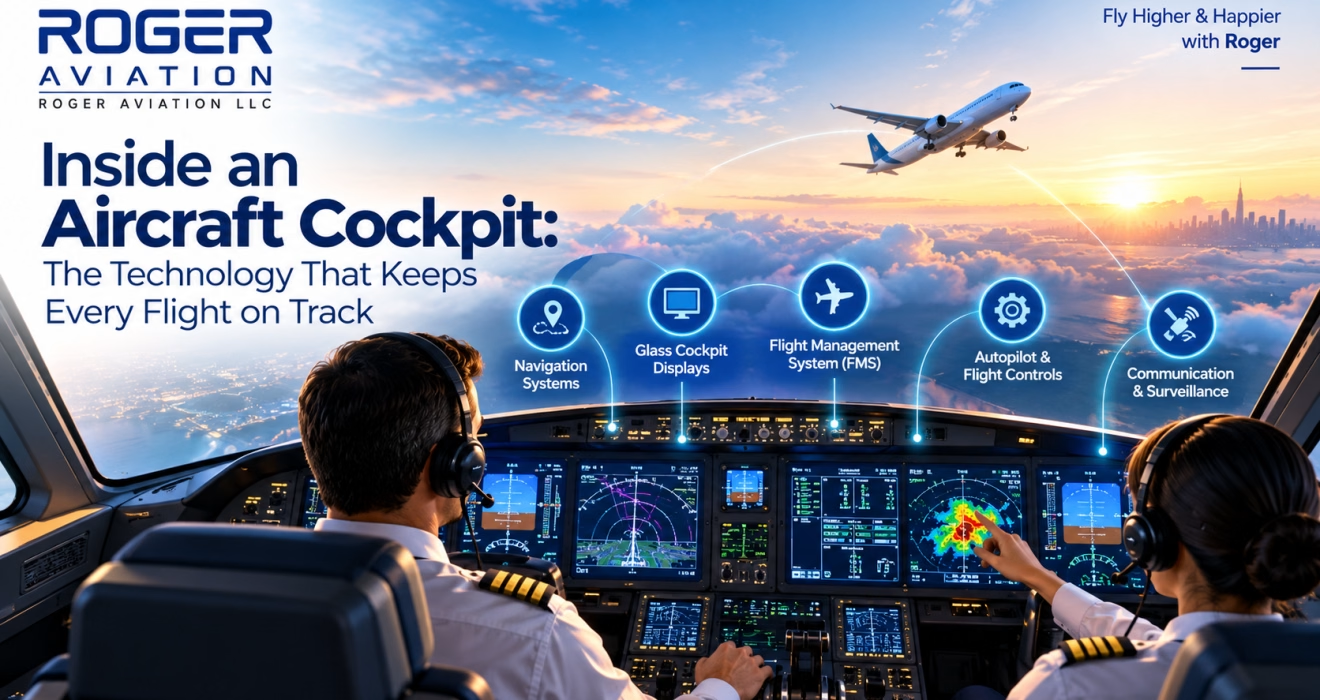
✈️ Inside an Aircraft Cockpit: The Technology That Keeps Every Flight on Track
Ever wondered how pilots know exactly where they are, how fast they are flying, and what lies ahead, even when they are thousands of feet above the clouds?
Behind the cockpit’s controls and digital displays is a sophisticated network of aviation technologies working together to help pilots make critical decisions.
Let’s explore how it works. 👇
🖥️ 1. Glass Cockpit: The Aircraft’s Digital Command Centre
Modern aircraft increasingly use a glass cockpit, where digital displays bring essential flight information together in one place.
Instead of relying primarily on individual mechanical instruments, pilots can access information such as:
✈️ Altitude and airspeed
🧭 Heading and navigation
🌦️ Weather and flight conditions
⚙️ Engine and aircraft system status
The Primary Flight Display (PFD) presents essential flight information, while the Multi-Function Display (MFD) can show navigation maps and other operational data.
The objective is simple: give pilots a clearer picture of the aircraft and its surroundings.
🧠 2. Avionics: The Technology Behind the Cockpit
Avionics refers to the electronic systems used in aircraft for navigation, communication, monitoring, and control.
These systems receive information from sensors, process it through computers, and present relevant data to the flight crew.
Key technologies include:
🔹 Air Data Systems: Provide information used to determine airspeed, altitude, and vertical speed.
🔹 Inertial Reference Systems: Help determine aircraft attitude, heading, and movement.
🔹 Flight Management System (FMS): Helps manage flight plans, navigation, and performance calculations.
🔹 Communication and Navigation Systems: Enable communication with air traffic control and support navigation along the planned route.
Together, these technologies help pilots maintain situational awareness throughout the flight.
🤖 3. Autopilot and Flight Management Systems
Autopilot is often misunderstood as a system that simply flies the aircraft on its own.
In reality, modern flight guidance systems can help maintain selected headings, altitudes, speeds, and flight paths, depending on the aircraft and system configuration.
The Flight Management System helps the crew manage the planned route and associated navigation and performance information.
But here is the important distinction: automation supports the pilot, it does not eliminate the pilot’s responsibility.
Pilots must monitor system performance, verify automation modes, assess changing conditions, and intervene when necessary.
📡 4. What Does AI Bring to the Modern Cockpit?
Artificial intelligence is creating new opportunities across aviation, including predictive maintenance, operational analytics, decision support, and intelligent assistance.
Connected aircraft data can help identify patterns, highlight anomalies, and provide insights that support better operational decisions.
However, AI is not a universal replacement for certified avionics or established flight procedures. Its role depends on the application, safety requirements, and regulatory approval.
The future lies in combining reliable aviation systems, quality data, intelligent software, and human expertise.
🔐 5. Why Integration and Reliability Matter
A cockpit is not simply a collection of screens. It is part of a wider aviation ecosystem connecting aircraft systems, flight planning, air traffic management, maintenance, and operational data.
Reliable information, system redundancy, cybersecurity, and human-centred design are essential to maintaining safe and effective operations.
As aircraft technology evolves, integrating systems and managing increasingly complex data will remain important industry challenges.
🚀 The Future of Cockpit Technology
From advanced avionics and digital displays to connected aircraft and AI-supported insights, cockpit technology continues to evolve.
Yet one principle remains unchanged:
Technology provides the information. Skilled pilots turn it into decisions.
At Roger Aviation, we believe the future of aviation depends on connecting technology, data, and aviation expertise to support smarter, more reliable operations.
✈️ Fly Higher & Happier with Roger.
💬 Your turn: Which cockpit technology do you think will have the greatest impact on aviation over the next decade: AI-powered decision support, advanced avionics, or greater aircraft connectivity?
#AviationTechnology #Avionics #AircraftCockpit #FlightManagementSystem #AIinAviation #AviationSafety #DigitalAviation #RogerAviation