
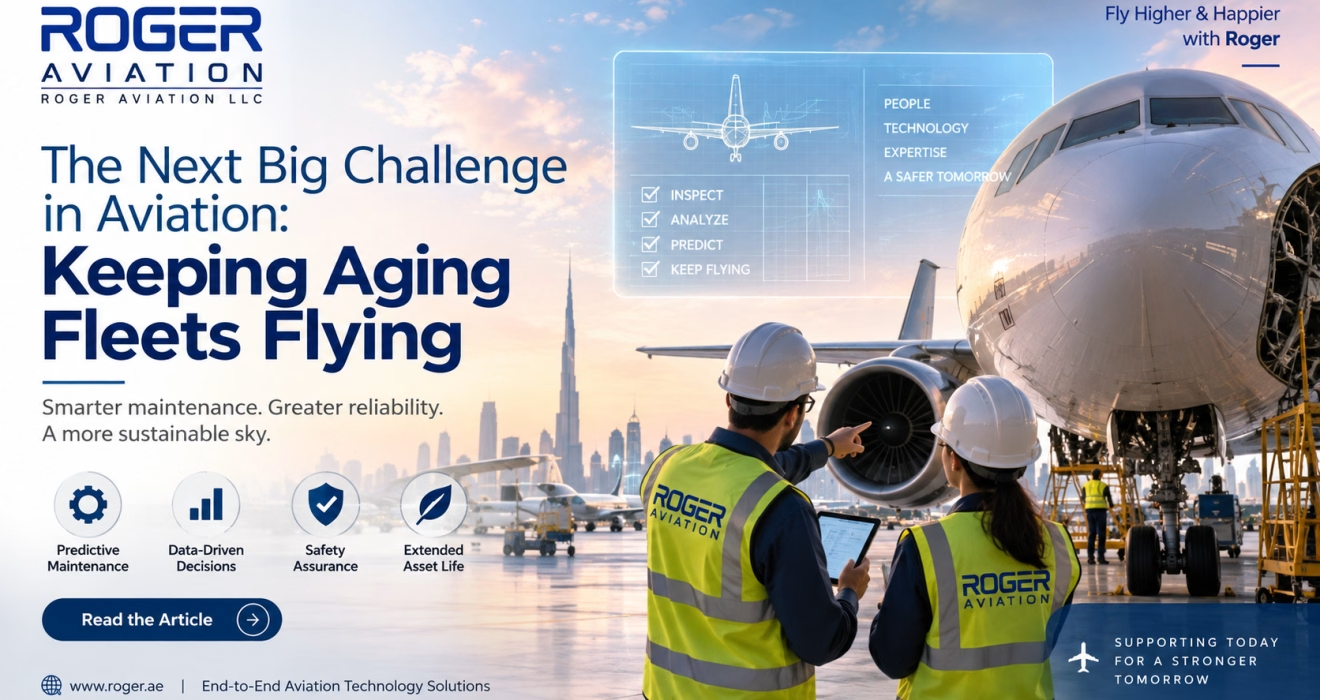
✈️ The Next Big Challenge in Aviation: Keeping Aging Fleets Flying
The aviation industry is investing heavily in new aircraft, digital transformation, artificial intelligence, and sustainable technologies.
But there is another challenge quietly becoming more important:
How do we keep aging aircraft flying safely, reliably, and efficiently?
As airlines and operators continue to operate aircraft for longer periods, maintaining an aging fleet is becoming more than a maintenance requirement. It is becoming a strategic business challenge.
🛠️ Aging Aircraft Require Smarter Maintenance
An aircraft does not simply become “old” on a particular date.
Its condition depends on factors such as:
- Flight cycles and flight hours
- Operating environment
- Maintenance history
- Component reliability
- Structural condition
- Availability of replacement parts
- Quality of maintenance planning
As aircraft accumulate more cycles and hours, operators need increasingly detailed visibility into their condition.
Traditional scheduled maintenance alone may not provide the complete picture.
This is where data-driven maintenance becomes critical.
📊 From Reactive Maintenance to Predictive Decisions
Modern aircraft generate enormous amounts of operational and maintenance data.
The opportunity is to transform that data into actionable intelligence.
Aircraft data → Analysis → Early detection → Predictive maintenance → Better decisions
Predictive maintenance can help maintenance teams identify potential issues before they develop into major operational disruptions.
Instead of asking:
“What failed?”
the industry can increasingly ask:
“What is likely to fail, and when?”
That shift can fundamentally change how aging fleets are managed.
🔧 Extending Aircraft Life Without Compromising Safety
Keeping an aircraft in service longer is not simply about reducing replacement costs.
It requires disciplined engineering, inspection, maintenance planning, regulatory compliance, and continuous monitoring.
For operators, the objective is to achieve the right balance between:
Safety + Reliability + Availability + Cost + Asset Life
Every additional year of operation needs to be supported by the right maintenance strategy and technical insight.
🧠 Technology Will Play a Bigger Role
The future of fleet maintenance will increasingly connect multiple technologies and information sources.
AI & Data Analytics
Identify patterns and anomalies across large volumes of aircraft and maintenance data.
Predictive Maintenance
Move from scheduled intervention toward condition-based and predictive approaches where appropriate.
Digital Twins
Create digital representations that can support monitoring, analysis, simulation, and decision-making.
IoT & Sensor Diagnostics
Capture real-time information from aircraft systems and components.
Integrated Maintenance Systems
Connect maintenance planning, inventory, engineering, operations, and reporting into a more unified information environment.
Technology alone, however, is not the answer.
The real value comes when technology, aviation expertise, and operational data work together.
🌍 The Sustainability Dimension
Extending the useful life of an aircraft can also form part of a broader sustainability strategy.
Replacing aircraft is a major investment and involves significant resources across manufacturing, logistics, infrastructure, and operations.
Where technically and economically appropriate, maintaining existing aircraft safely and efficiently for longer can contribute to more responsible asset utilization.
The key principle remains clear:
Longer life should never mean lower safety standards.
🚀 The Future of Aging Fleet Management
The aviation industry is moving toward a future where maintenance decisions will increasingly be supported by connected data, predictive intelligence, and real-time operational insights.
The organizations that can bring these capabilities together will be better positioned to understand their aircraft, anticipate maintenance needs, optimize resources, and make informed fleet decisions.
The question is no longer simply:
“How old is the aircraft?”
The more important question is:
“How well do we understand the aircraft?”
Because an aging fleet does not necessarily mean an outdated fleet.
With the right technology, maintenance strategy, data, and expertise, aircraft can continue serving operators safely and efficiently for many years.
✈️ At Roger Aviation
At Roger Aviation, we believe the future of aviation maintenance lies at the intersection of aviation expertise, technology, data, and intelligent decision-making.
From aviation maintenance management and digital transformation to predictive maintenance, software solutions, analytics, and integrated aviation systems, our focus is on helping aviation organizations build smarter and more connected operations.
Keeping aircraft flying is not just about maintaining the past.
It is about using today’s technology to build a more reliable aviation future.
Fly Higher & Happier with Roger. ✈️
#Aviation #AircraftMaintenance #MRO #PredictiveMaintenance #FleetManagement #AviationTechnology #DigitalTransformation #Aircraft #AviationSafety #DataAnalytics #RogerAviation #DubaiAviation